


If you have extinguishers on site and are unsure what the dates or labels mean, it can be difficult to tell whether a monthly check is enough or a contractor needs to service the equipment. This guide explains the usual fire extinguisher service intervals, what each check involves and what records to keep.
What the law says about fire extinguisher servicing
In England and Wales, the Regulatory Reform (Fire Safety) Order 2005 requires the responsible person to ensure that firefighting equipment is maintained in an efficient state, in efficient working order and in good repair. The responsible person is usually the employer, building owner or person who has control of the premises.
The Order does not set a specific annual servicing date for every extinguisher. BS 5306-3 is the British Standard that describes the commissioning and maintenance of portable fire extinguishers. A British Standard is not law in itself, but following it is a recognised way to help demonstrate that you have met your maintenance duty. Your fire risk assessment and the manufacturer’s instructions also matter.
The practical approach is to use an appropriate and proportionate maintenance system: regular in-house visual checks, plus servicing by a competent technician at the intervals applicable to each extinguisher type.
The three levels of extinguisher check
A quick visual check is not the same as a technician’s service. The three levels below help explain what the service label or contractor’s paperwork may refer to.
1. Monthly visual inspection
A nominated person at your workplace can carry out a basic inspection. As a minimum, check each extinguisher monthly, and more often if your risk assessment or site conditions call for it.
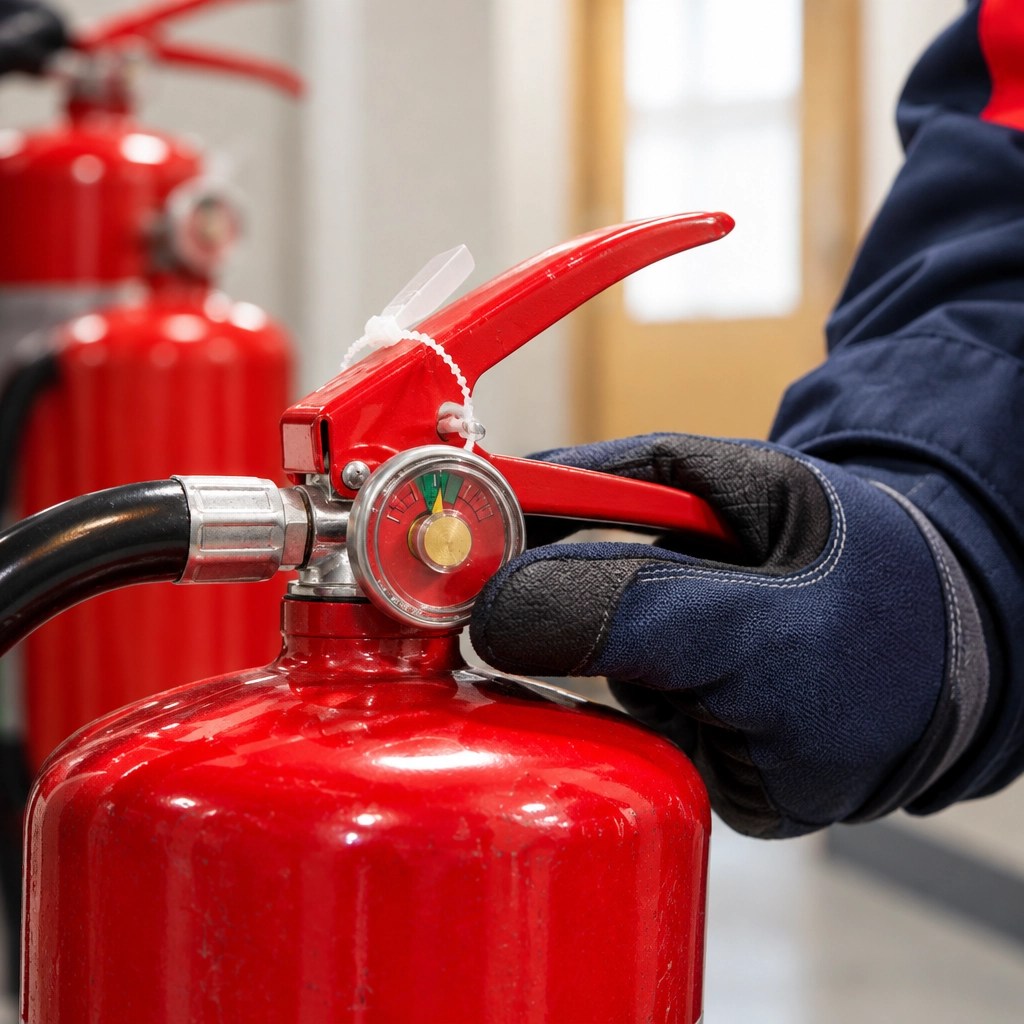
Check that the extinguisher:
- Is in its designated place, accessible and not obstructed.
- Has no obvious damage, corrosion or signs of discharge.
- Has its pin, safety clip and tamper seal intact.
- Has a pressure gauge within its indicated operating range, where fitted.
- Has visible signage and legible operating instructions, and is suitable for the nearby risks.
Record the date, who carried out the check and any fault or action needed. If an extinguisher is missing, damaged, discharged or appears unsuitable, arrange prompt follow-up. Do not treat a monthly visual check as a substitute for professional maintenance.
2. Annual service by a competent technician
A competent technician carries out a more detailed examination, commonly called the annual or basic service. The technician checks the extinguisher’s external condition and operation, confirms its weight or contents as appropriate, and examines items such as the hose, nozzle, safety pin and seals. Defective parts may be replaced, and the service label or records updated.
The precise work depends on the extinguisher design and condition. An annual service is not necessarily a full internal examination or discharge test. Ask the contractor to explain what their service includes and to identify any further work due.
3. Extended service or overhaul at set intervals
Some extinguishers need additional work at longer intervals. These are often described as an extended service, refurbishment or overhaul. The interval and procedure depend on the type and construction of the extinguisher. Water, foam, powder, wet chemical and CO₂ units do not all follow the same schedule.
For many common extinguishers, more extensive work is due at around five-year intervals, while certain types have longer intervals or specific overhaul requirements, commonly around ten years. CO₂ cylinders, for example, may require a pressure test and other overhaul work at the relevant interval. The precise requirements can vary, so check the extinguisher’s label and records and ask the technician to confirm what applies to each unit.
Do not rely on a blanket “every five years” rule for every extinguisher. A competent contractor should identify the type, check the manufacturer’s instructions and explain when extended work or replacement is due.
Service, inspection and recharge: what is the difference?
An inspection is a visual check to identify obvious problems and confirm the extinguisher remains accessible. It does not involve the full checks performed during a technician’s service.
A service is a planned maintenance visit by a competent person. It may include examination of the cylinder and components, checking the charge or weight, recording the result and replacing defective parts. Extended work may involve additional internal checks or testing, depending on type and due date.
A recharge is required after an extinguisher has been used, even if it was only discharged briefly. A discharged unit should not be returned to its normal position as if it were ready for use. Arrange for it to be replaced or recharged promptly.
Why keep up with servicing?
Extinguishers can look fine on the wall but still have faults that a visual check cannot identify. Pressure can be lost, a hose can deteriorate, corrosion can affect the cylinder, and powder may compact over time. Regular maintenance helps identify issues before the equipment is needed.
There are also practical business reasons to keep a clear servicing record. Insurers may have their own requirements, and an enforcement officer may ask how equipment is maintained. A current register and service paperwork make it easier to show what equipment is on site and what has been done.
What records should you keep?
Keep a register that identifies each extinguisher and its maintenance history. Useful details include:
- Type, capacity, location and date of manufacture.
- Monthly inspection dates, who completed them and any follow-up actions.
- Service dates and the technician’s report, certificate or other service record.
- Details of discharged, damaged, replaced or removed units.
Keep the service label legible and make sure records can be matched to the correct extinguisher. This makes it easier to spot overdue work, track equipment moved by contractors and answer questions during a fire safety review.
Common problems found on site
Routine checks and professional servicing can uncover straightforward issues that are easy to miss in a busy workplace:
- Missing or broken tamper seals.
- Extinguishers hidden behind stock or furniture.
- An extinguisher type that is unsuitable for the nearby hazard.
- Old or damaged equipment still left in place.
- Monthly checks not recorded, or no service record available.
- Equipment removed during building work and never returned.
If an extinguisher has been moved, check that it is still accessible and appropriately positioned. Selection and siting should follow the fire risk assessment and relevant guidance. For instance, do not place water extinguishers where they could be used on electrical equipment.
Fire extinguisher hire for events and temporary sites
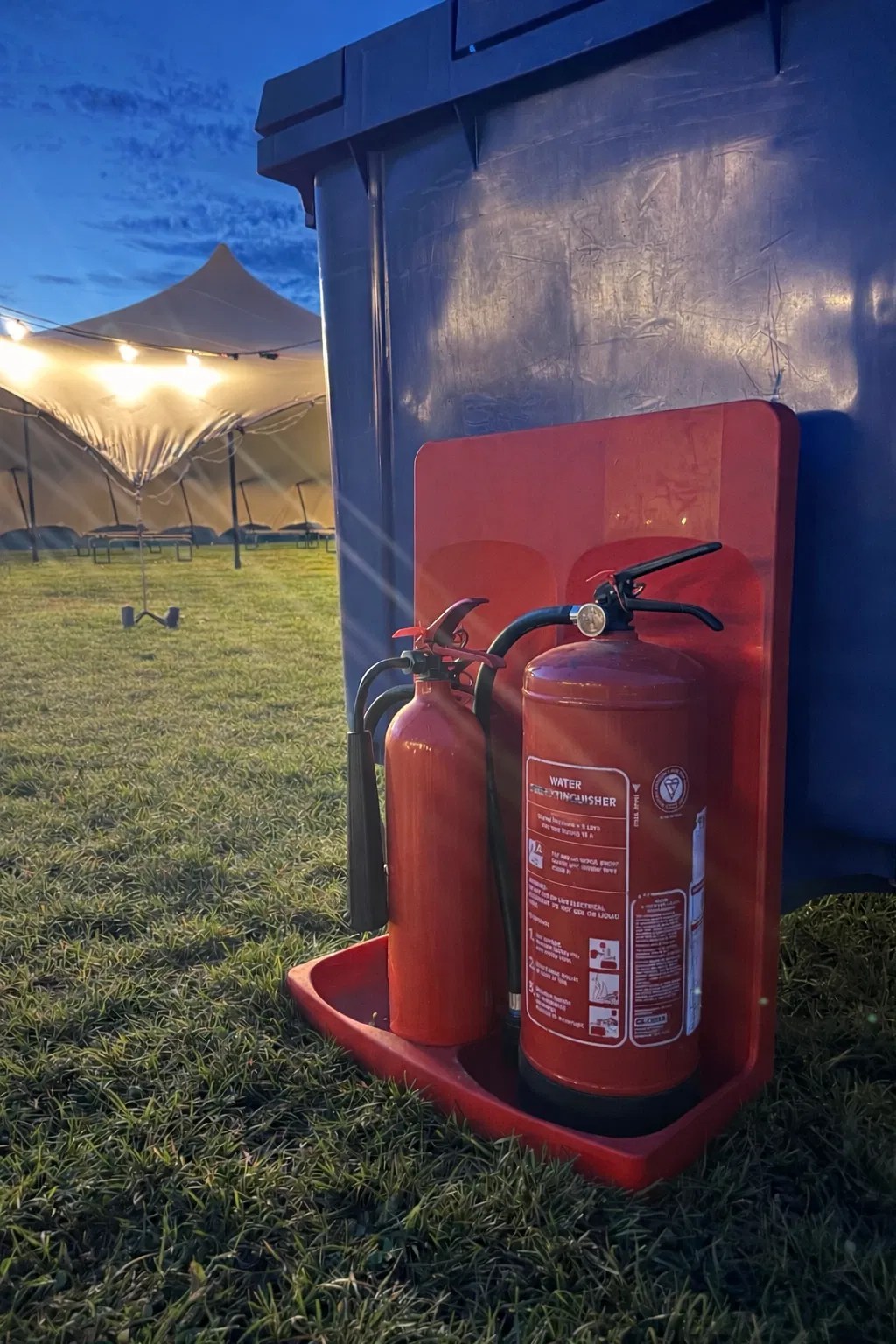
For an event, construction project or other temporary site, extinguishers need to suit the hazards and layout, not just the number of structures. Consider activities such as cooking, generators, temporary electrical installations and fuel storage when planning the equipment and its location.
Before the event, confirm that hired extinguishers are suitable, commissioned and recorded as required. During the event, keep them accessible and check their condition as part of site safety arrangements. Arrange replacement if a unit is discharged or damaged, and make sure equipment is collected after the event.
Aero Fire & Rescue provides fire extinguisher hire for events and temporary sites, alongside wider fire cover and safety services.
Questions to ask a servicing contractor
Before arranging a visit, ask the contractor:
- How do you demonstrate technician competence, and are you third-party certified?
- What checks and parts are included in the quoted service?
- Will you provide a clear record or certificate and help maintain an extinguisher register?
- Will you identify units that should be replaced rather than serviced?
- What is the process if equipment is discharged or found defective?
A clear answer helps you understand what work is included and what actions you will need to take afterwards.
Frequently asked questions
How often do fire extinguishers need servicing?
A common maintenance schedule includes monthly user inspections and a service by a competent technician about once a year. Additional extended servicing or overhaul is required at intervals that depend on the extinguisher type and manufacturer’s instructions. Check the service label and ask a technician to confirm what is due for each unit.
Can I service my own fire extinguishers?
You can carry out routine visual inspections if you are nominated and understand what to check. A technician’s service involves specialist examination and maintenance, so it should be carried out by a competent person. If you are unsure whether a fault is minor or requires removal from service, contact your maintenance provider.
Do I need to do monthly checks?
Monthly checks are a practical way to confirm extinguishers remain in place, accessible and apparently ready for use. Record the date, who checked them and any problems found. Your risk assessment or site conditions may call for more frequent checks. These visual inspections do not replace professional servicing.
What is BS 5306-3?
BS 5306-3 is a British Standard covering the commissioning and maintenance of portable fire extinguishers. It sets out recognised maintenance practice, including different service levels and type-dependent intervals. It is not legislation itself, but following it can help a responsible person demonstrate a suitable approach to maintaining firefighting equipment.
Arrange fire extinguisher servicing
Aero Fire & Rescue Service Ltd supplies, hires, services and maintains fire extinguishers for events, commercial premises and temporary sites across the UK and Ireland. To discuss your equipment, locations and records, request a quote or call 0330 111 3635.
Leave a Reply