

Planning event medical cover for a Christmas market means deciding what people, skills and facilities are appropriate for your particular site, not picking a standard number of first aiders from a formula. If you are preparing for a Safety Advisory Group (SAG) meeting or agreeing a budget with a council or landowner, a clear, risk-based rationale is more useful than a headcount alone.
Why Christmas markets need careful medical planning
A festive setting does not automatically make an event low risk. Cold, dark evenings, wet or icy surfaces, uneven ground and long operating hours can increase the likelihood of slips, trips and cold-related illness. Crowds may be funnelled between stalls, while children, older visitors and people with existing health needs may need particular consideration.
Food and drink add further hazards. Hot oil, gas equipment and hot liquids can cause burns; alcohol may affect judgement and behaviour. If your programme includes a stage, rides, an ice rink, fire pits or animals, each activity changes the demands on your team. Staff and volunteers can also become cold and tired as the evening progresses.

How event medical cover is decided
There is no single legal formula that tells every organiser how many medics or ambulances to book. HSE guidance and the Purple Guide support a needs-based assessment: consider your event’s hazards, audience and arrangements, then explain why the proposed provision is appropriate and proportionate. SAGs are advisory rather than licensing bodies, but they commonly ask for a documented rationale.
Your assessment should address:
- Audience and attendance: expected footfall, peak numbers, age profile and any particular accessibility or health considerations.
- Hours and conditions: how long the market operates, when it is busiest, and the likely weather and light conditions.
- Site layout and access: crowd pinch points, distance between stalls, one-way systems, pedestrianised roads and how quickly responders can reach a casualty.
- Activities and hazards: food traders, alcohol, stages, rides, ice rinks, fire features or animals.
- Treatment and transfer: the nearest A&E and realistic travel time, ambulance access, and whether you have a suitable treatment space.
A pedestrianised town-centre market may be close to a hospital but difficult for an ambulance to reach during shopping traffic. A park market may have clearer vehicle access but longer distances across temporary or uneven surfaces. Record how the emergency vehicle will get in, where it can wait and how responders will be guided to a patient.

Match the level of care to the likely need
Think of provision as a ladder, rather than starting with an ambulance and working backwards:
- First aiders may suit a smaller, lower-risk market where needs are likely to be limited and onward referral is unlikely.
- Enhanced or advanced first aiders add capability where the risk assessment identifies a greater likelihood of injury or illness.
- Registered clinicians, such as a paramedic or nurse, may be appropriate where clinical assessment and treatment are anticipated.
- An ambulance resource may be needed where hospital transfer is reasonably foreseeable or access and transfer arrangements make one appropriate.
- A treatment point or medical centre can support care on site when the event’s scale, duration, layout or expected demand justifies a dedicated space.
As an illustration of the process, a small town market with a few hundred visitors an hour, limited activities and straightforward access is a different proposition from a city-centre event expecting 20,000 or more visitors, with evening peaks, alcohol, a stage and congested streets. Those descriptions do not determine a fixed staffing number. Use them to show why the assessment, provision and escalation arrangements differ.
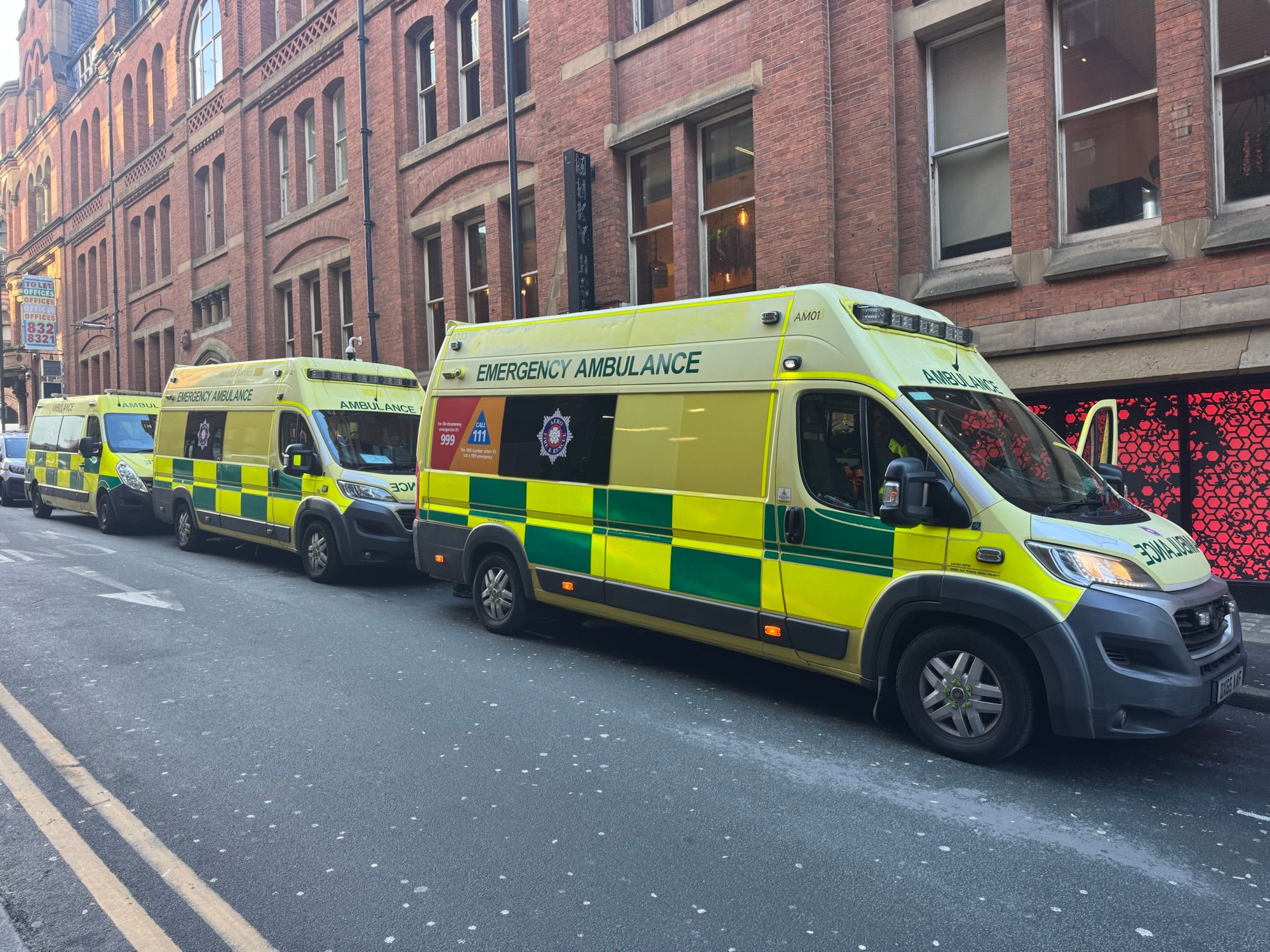
For a real example of the range of deployment possible, Aero Fire & Rescue provided three A&E ambulances daily for a major city-centre Christmas market during the 2025/26 season. That is a proof point, not a template: your event needs its own assessment.
CQC registration: what organisers should check
If your provider will deliver clinical treatment, ask about its registration and the scope of the service. Aero Fire & Rescue Service Ltd is registered with the Care Quality Commission (CQC), Provider ID 1-6188012290. CQC registration can give organisers a useful governance paper trail and regulatory reassurance, but it is not an event licence and does not replace your risk assessment, SAG engagement or emergency plan.
The rules are changing. CQC registration covers regulated activities, not every first aid service: first aid alone is not the same as regulated clinical treatment. Following regulatory changes, CQC registration for relevant treatment of disease, disorder or injury at events is due to become a legal requirement from 6 December 2027. Check the CQC guidance on treatment at events and confirm what applies to your event date and the service being provided.
You can review Aero Fire & Rescue’s event medical cover and wider medical services when defining the scope of your enquiry.
What good looks like on the day
Your plan should work in practice, not just on paper. Before opening, check that:
- The first aid point is visible, signed and reachable by the public.
- Staff and responders know the radio channels and how to call for support.
- There is a documented escalation route, including when and how to call 999.
- An ambulance can physically reach the agreed access point, with a clear route to the casualty.
- Patient records are managed appropriately and the provider can supply a post-event report.
If your treatment space is a tent or room, consider lighting, privacy, warmth and access for people with reduced mobility. Brief stallholders and stewards on how to contact the medical team and what information to give when reporting an incident.
What to send when requesting a quote
To help a provider recommend appropriate event medical services, share:
- Event dates, operating hours and expected total and peak footfall.
- A site plan showing entrances, stalls, activities, pinch points and vehicle access.
- The nearest A&E and estimated journey time from the site.
- The hazards and activities, including food traders, alcohol and entertainment.
- Any treatment space available and requirements raised by your SAG.
With this information, the provider can discuss the right mix of event first aiders, clinicians, ambulance resources or a medical centre, and explain the reasoning behind the proposal.
Frequently asked questions
Do I legally need medical cover at a Christmas market?
There is no universal rule requiring every Christmas market to have a particular number or type of medical staff. Organisers must plan safely and make suitable first-aid arrangements based on their event’s risks. HSE guidance advises considering the public’s needs; councils, licensing conditions, insurers or a SAG may also set expectations for your event.
How many first aiders do I need for a Christmas market?
There is no fixed number that applies to all markets. Assess expected and peak attendance, operating hours, audience, activities, site layout, weather, ambulance access and likely response times. Use those findings to justify the level of provision in your event medical plan, and discuss any local SAG requirements with your provider.
Is a first aid tent enough or do I need an ambulance?
A first aid point may be suitable for a market where the assessment indicates limited need and hospital transfer is unlikely. An ambulance or other clinical resource may be appropriate where transfers are foreseeable, the site is difficult to access, or the event’s activities and scale increase the risk. Document the decision and escalation route.
Does event medical cover need to be CQC registered?
Not every first aid service requires CQC registration. Registration applies to regulated activities, and the rules for relevant clinical treatment at events are changing, with a legal requirement due from 6 December 2027. Ask your provider what care it will deliver, whether it is registered for the relevant activity, and what applies on your event date.
Next step: plan your Christmas market medical cover
Start with your site plan, likely peak attendance and hazards, then document how your proposed provision meets them. To discuss event medical cover across the UK and Ireland, request a quote or call 0330 111 3635. Aero Fire & Rescue operates 24/7.
Leave a Reply